

A Peak Soviet Fairy Tale
Panna a Netvor ('The Virgin and the Monster')

More on horror can be found here.
Are you tired of hearing about Wuthering Heights? Would you like to wage class war on Emerald Fennell for being Emerald Fennell, and for having a name like Emerald Fennell? Do you irrationally despise Jacob Elordi for reasons presumably outwith his control?1
What if I told you that there was another gothic romance you could be watching in 2026, untainted by looksmaxxed Hollywood physiognomies and aristocratic dribbling? What if I told you that it was actually gothic and actually romantic, and doesn’t constitute an attack upon any Bronte sister’s aura (or Mary Shelley’s, for that matter)? What if I told you that it pre-dates the birth of virtually everyone involved in Wuthering Heights, most importantly Jacob Elordi?
I am, of course, talking about a Czechoslovak production of Beauty and the Beast from 1978, which I am sure we all know and love. In the (un)likely event that anyone didn’t see the specific instagram reel that caused me to fall down this rabbit hole, a quick outline -
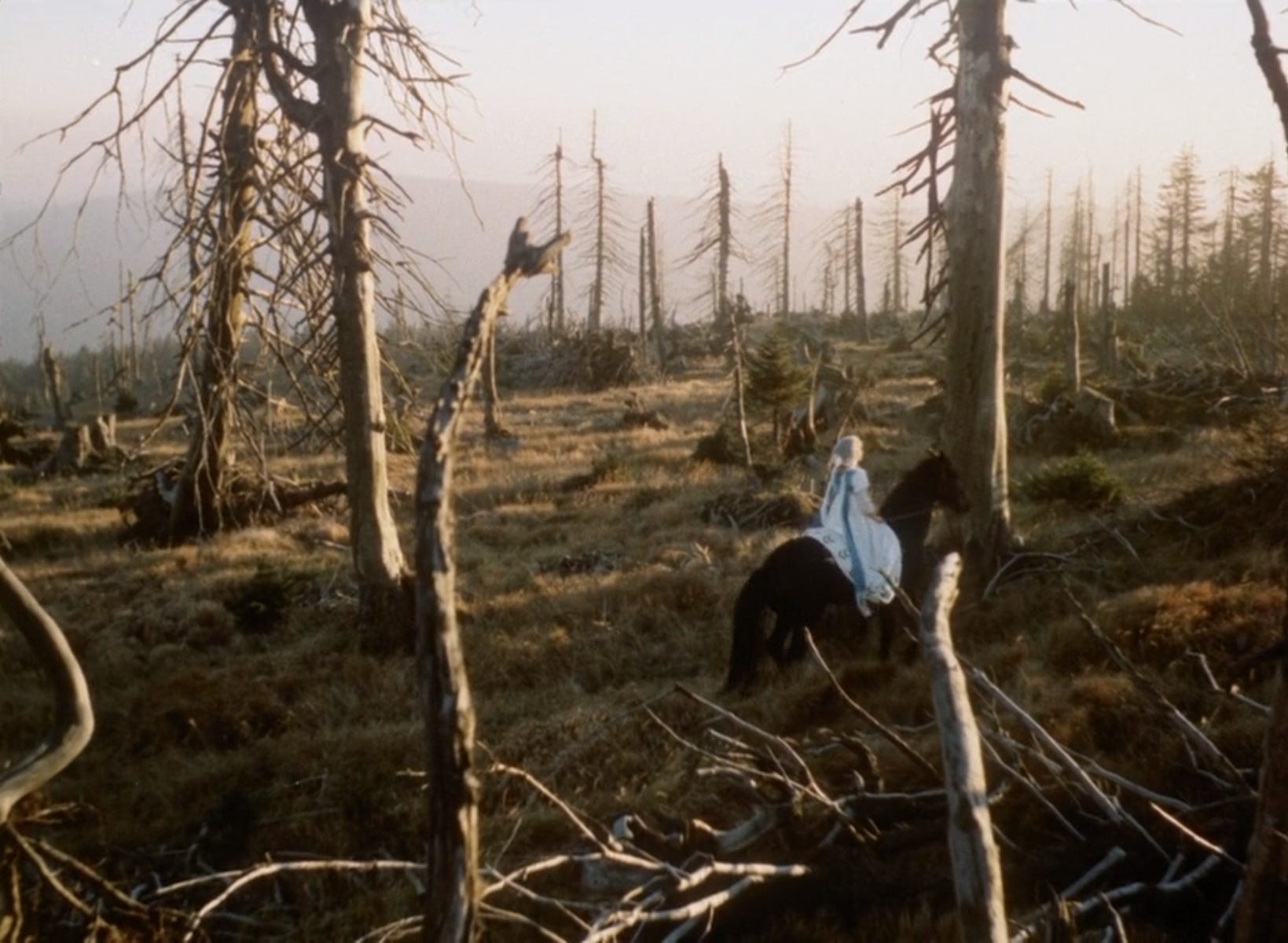
Far from Disney’s fluffy sing along,2 Panna a Netvor (literally: ‘The Virgin and the Monster’) is… actually very dark. In fact, it’s so dark that it’s often categorised as a horror film, and it does feel like horror for about 90% of its runtime. The director, Juraj Herz, is best known for The Cremator, a horror-comedy about [checks notes] a Nazi corpse-disposal guy,3 so if anything Panna a Netvor was a relatively light follow-up, and it does offer some much-needed relief in the form of romantic drama.
Nonetheless, Panna a Netvor is thoroughly spooky and gruesome from the outset. It opens with a doomed wagon train struggling through a dark and misty forest,4 with flocks of crows calling ominously above. This shot of the birds is followed by a credits sequence panning over strange paintings that are hard to make sense of, showing naked human figures among ghostly human-bird hybrids. The bird-like figures are monstrous and contorted, yet the humans don’t flinch from them, instead stretching out their arms towards them. There’s a sense almost of worship, making the forlorn winged monsters angelic.
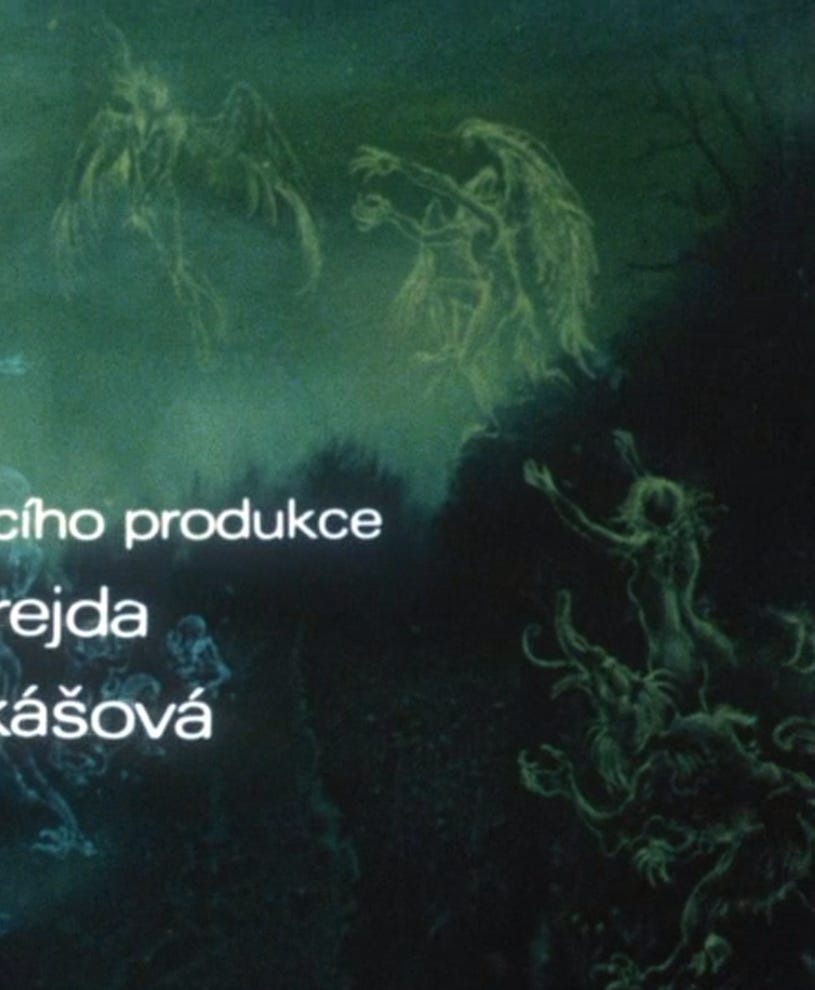
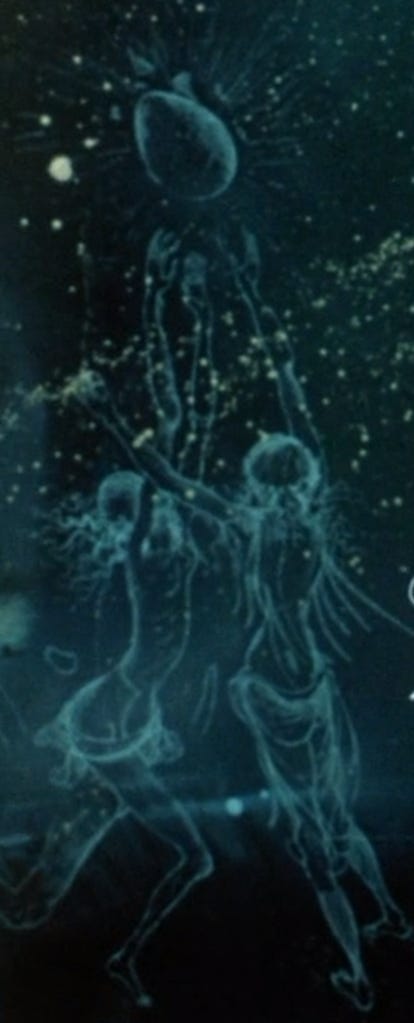
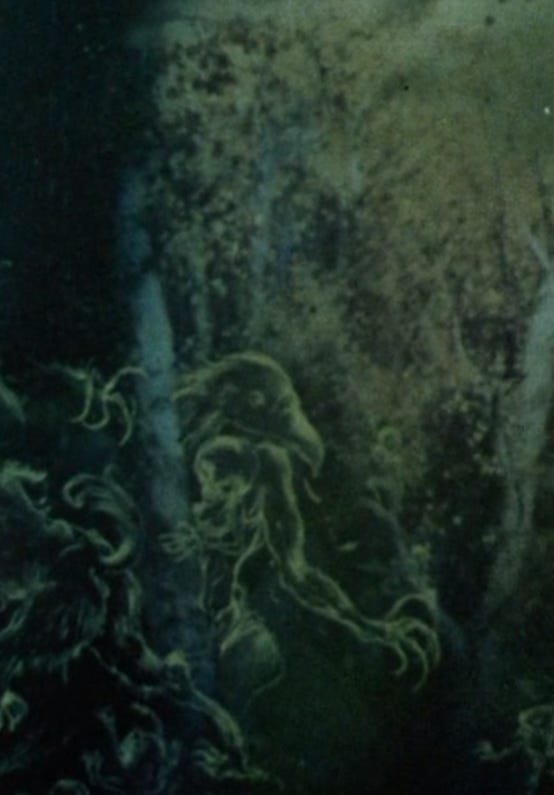
This, of course, foreshadows the appearance of the Beast, here depicted as a monstrous figure with the head of a falcon and scaly taloned hands, with a ragged cloak streaming behind him like wings. This bird-like image signals the film’s departure from the fairy tale,5 and accordingly, this is a particularly weird, complicated and tortured Beast.
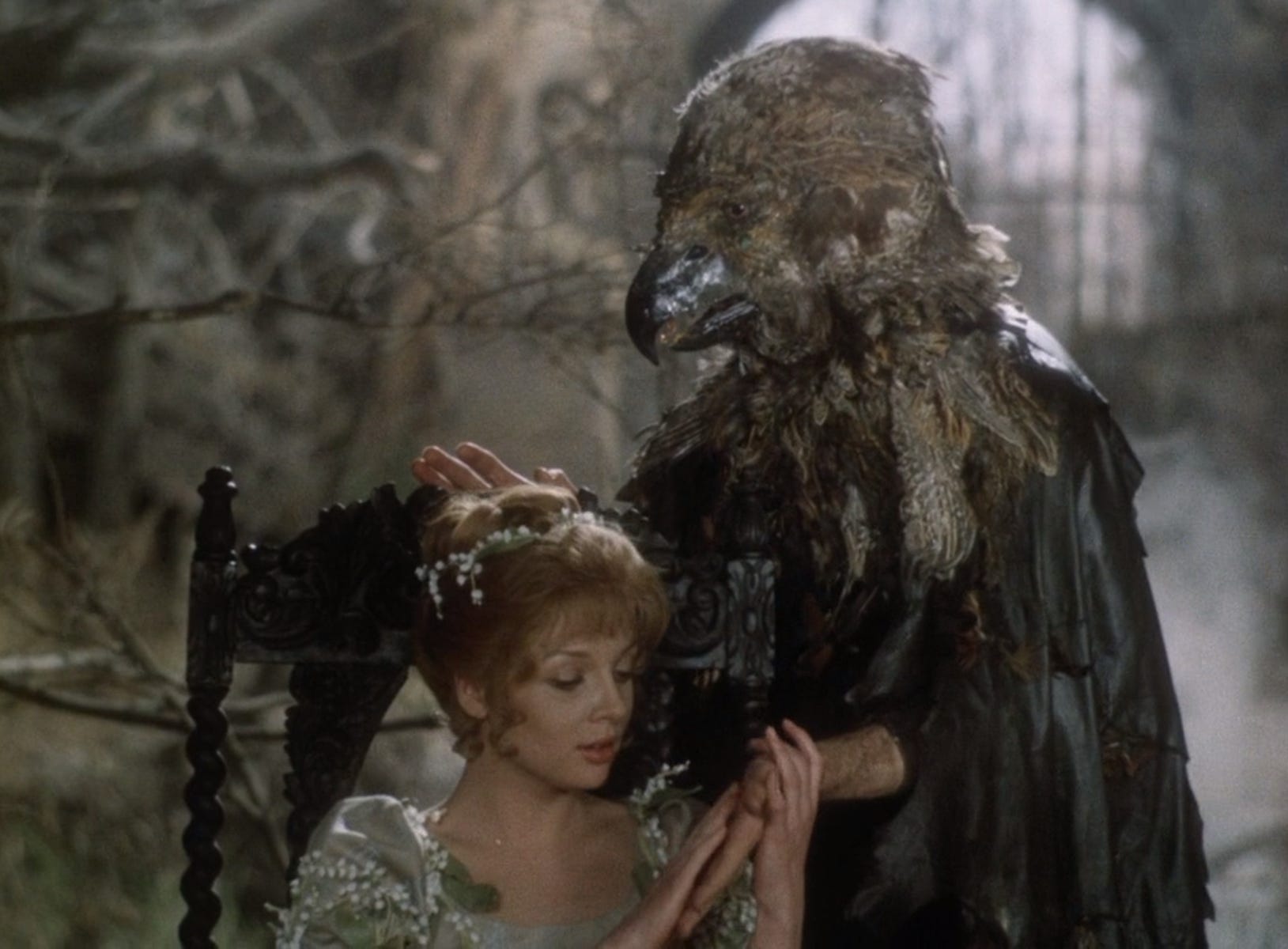
Unlike the ugly-but-benign creature we’re familiar with, this Beast is cursed with an overpowering thirst for human blood: functionally, he’s a vampire, and genuinely quite a scary and problematic one, complete with the familiar psychosexual undertones. This is not a Guillermo del Toro de-fanged monster man, it’s a really monstrous man, whose dark side must genuinely be confronted and overcome. There is no need for a Gaston or an Oscar Isaac Frankenstein, or even a wicked fairy godmother - the monster is the monster.
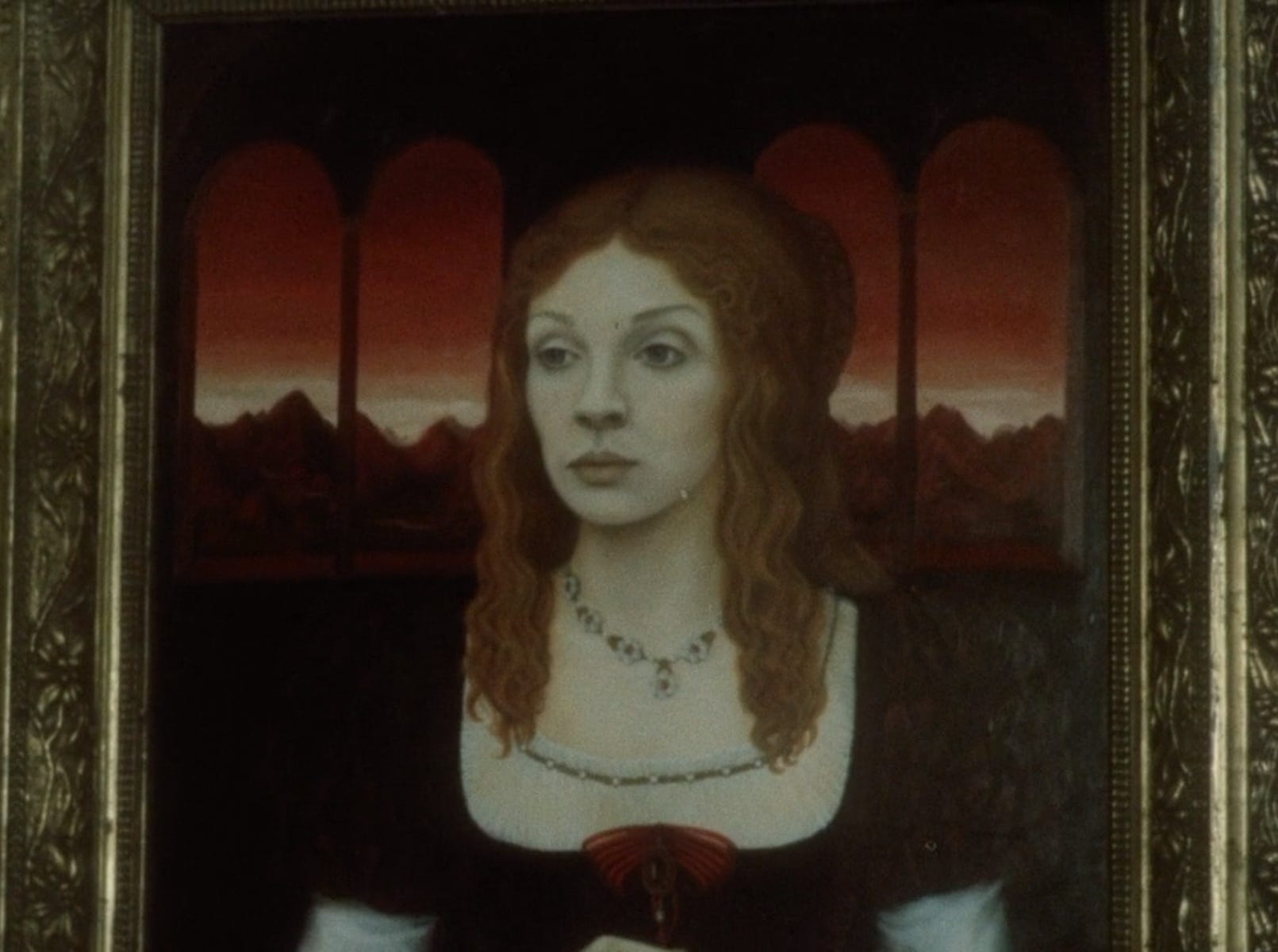
In his very first appearance, the Beast corners a woman in the forest and claws open her chest, and when Julie (that is, Beauty) arrives at his haunted estate, she is rendered unconscious by a drug administered by one of the creature’s ghostly servants.6 The Beast prepares to attack her, but stops at the last moment, instead violently clawing the face of her mother’s portrait, which resembles Julie.
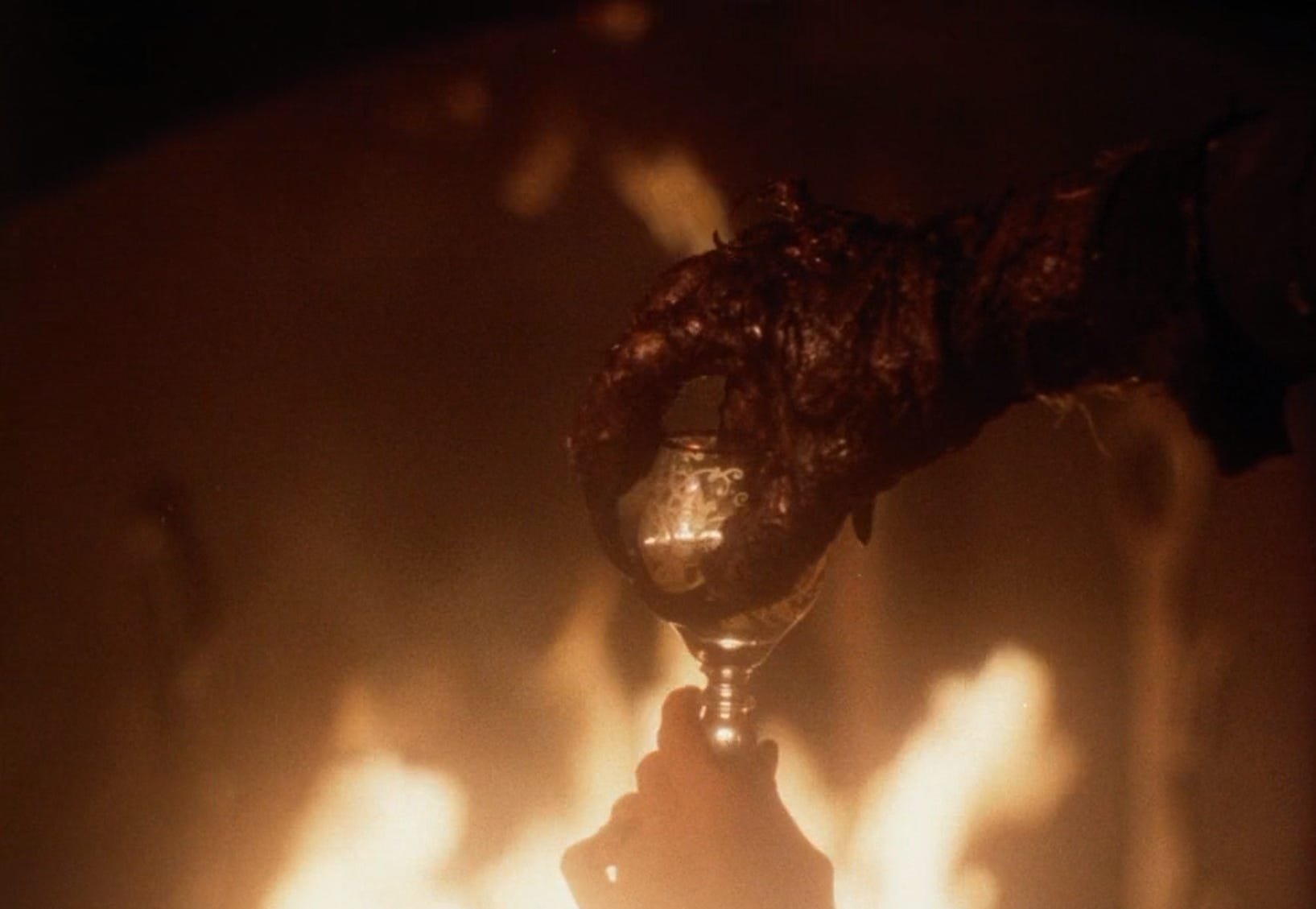
The monster’s violent appetite is represented by a menacing whispering voice, which he desperately bargains and pleads with in a series of unsettling scenes. The actor, Vlastimil Harapes, gives him a distinctly bird-like physicality, with rapid movements of his head, and his eerily human eyes can be seen glancing furtively through the mask as he struggles with his demonic nature.
As a substitute for Julie’s blood, he instead hunts deer in the forest, and it is notable that he repeatedly talks about hunting does specifically, using the feminine form, rather than the neutral deer. Very early on, the film links bloodlust and sexuality, showing animals butchered and gutted in a market7 immediately before a scene where Julie’s sisters discuss their arranged marriages, and this same gruesome entanglement of violence and desire is made manifest in the Beast.
What is most remarkable is that despite this grisly subtext, the film manages to make the Beast a profoundly tragic, even endearing figure. It helps that he is shown to struggle virtuously against his violent compulsions, and he also experiences something of an existential crisis (virtually mandatory in Soviet film), which progresses as his humanity increases. As his malignant inner voice8 says, he once lived without the burden of conscience, truly one of the birds and beasts, but with the arrival of Julie (and the implied weakening of his curse), he is faced with the pain of consciousness. He is alienated from both humans and animals, and his growing awareness of his isolation is agony.
Throughout, there is a sense that becoming human comes with a cost: after Julie touches the Beast’s talons, they are transformed into human hands, and though he is initially delighted, he is later distressed to learn that he can no longer catch does without his claws, and when his ghostly servants desert him he begins to starve. The film suggests that to be human is to be vulnerable, and to depend on others. Like a saint, the Beast is at once elevated and made tangible to the viewer through suffering.
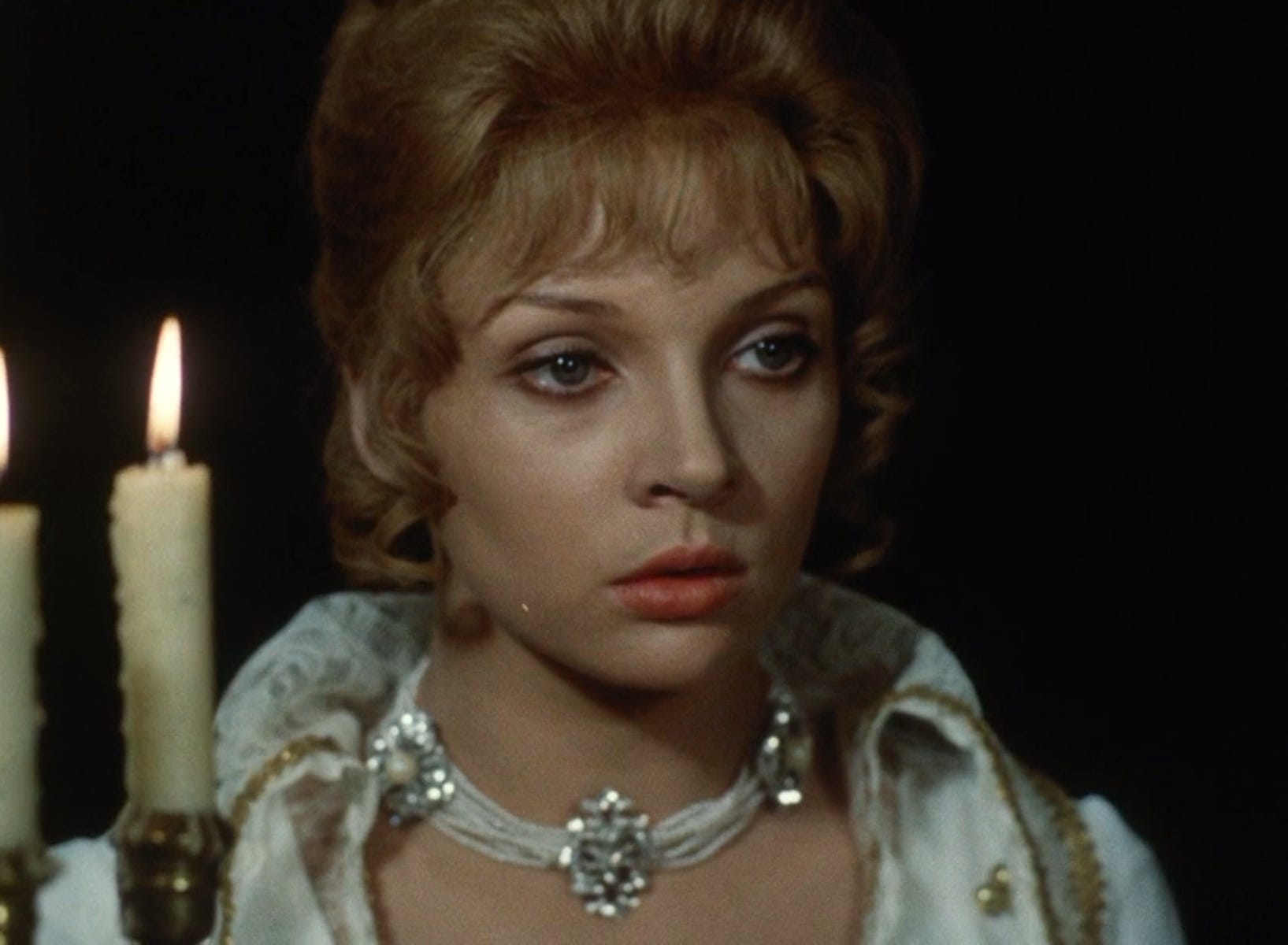
There is less to say about Julie, who is a more straightforwardly virtuous fairy tale heroine. She is the beloved youngest daughter of a widower, with two comically obnoxious half-sisters, and, per the original tale, she goes to live with the Beast to save her father, who angered the Beast by picking a rose from his garden for Julie. Zdena Studenkova is dazzlingly beautiful in a very folkloric way, and wonderful in the role. She benefits from several scintillating costumes, as she should.
The Beast visits Julie each evening, and they converse, but only on the condition that she always faces away from him, and so never sees him, only hearing his pleasant and courteous voice. This conceit leads to a series of brilliantly tense dialogues, as Julie very often nearly catches a glimpse of her monstrous host as he moves about behind her. (And of course, she does eventually see his reflection, and Drama ensues.)
The gradual growth of their relationship, with alternating breakthroughs and setbacks, is as brilliantly written and performed as anything I’ve seen, and maintains suspense until quite literally the last minute. I found myself genuinely anxious towards the end, despite knowing how the story is supposed to end.
The setting, too, is beautifully realised, with the cursed forest and the Beast’s mouldering estate as the standouts. Trees and roots are a constant presence, always reaching out their gnarled limbs towards Julie threateningly, or perhaps longingly, just as the humans reach out towards the monsters in the opening credits. The estate’s iron gates are appropriately wrought in the shape of a double-headed eagle, and strange enrooted statues stand guard in front of the doors, furtively turning their heads to watch guests passing.
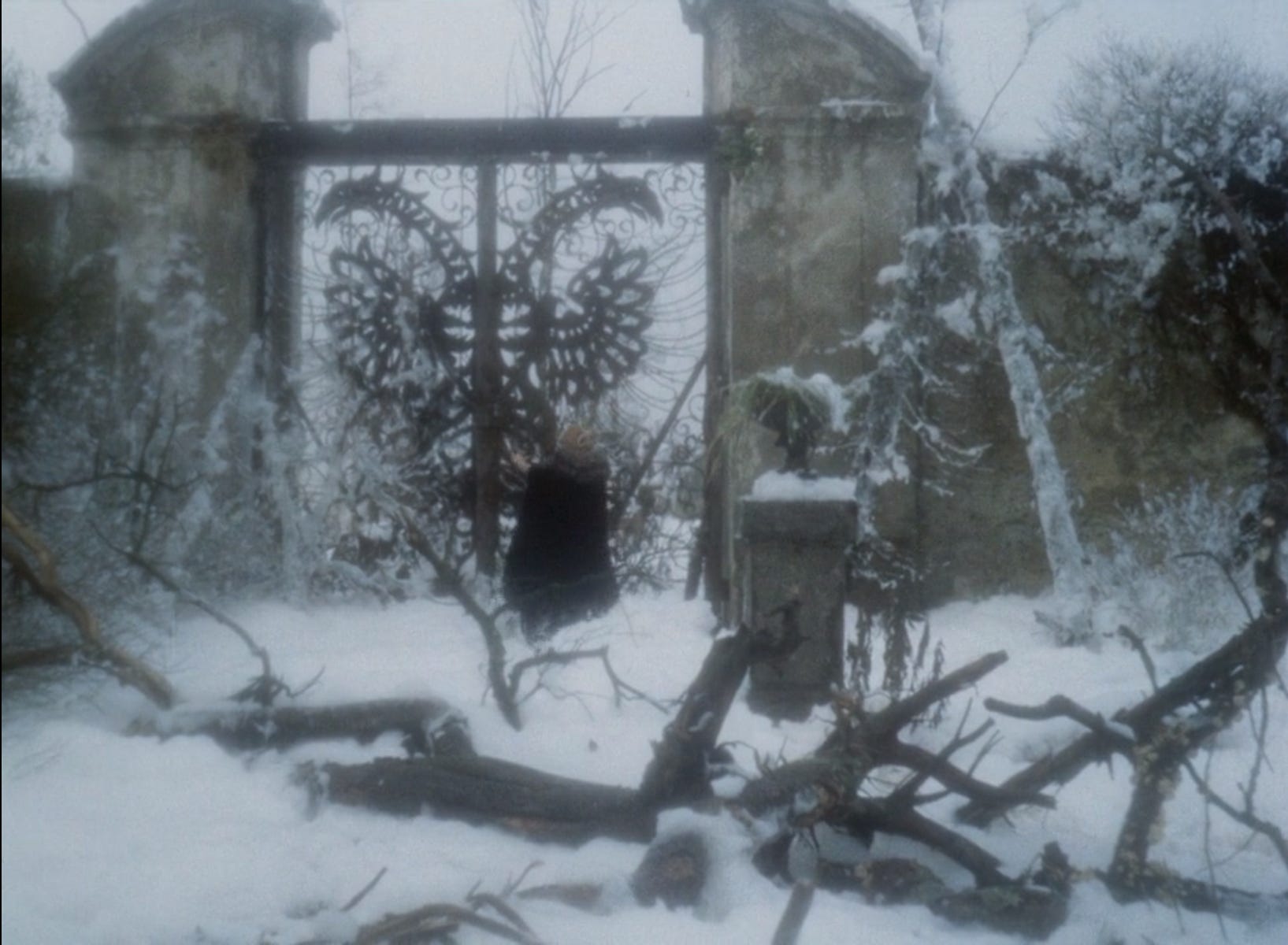
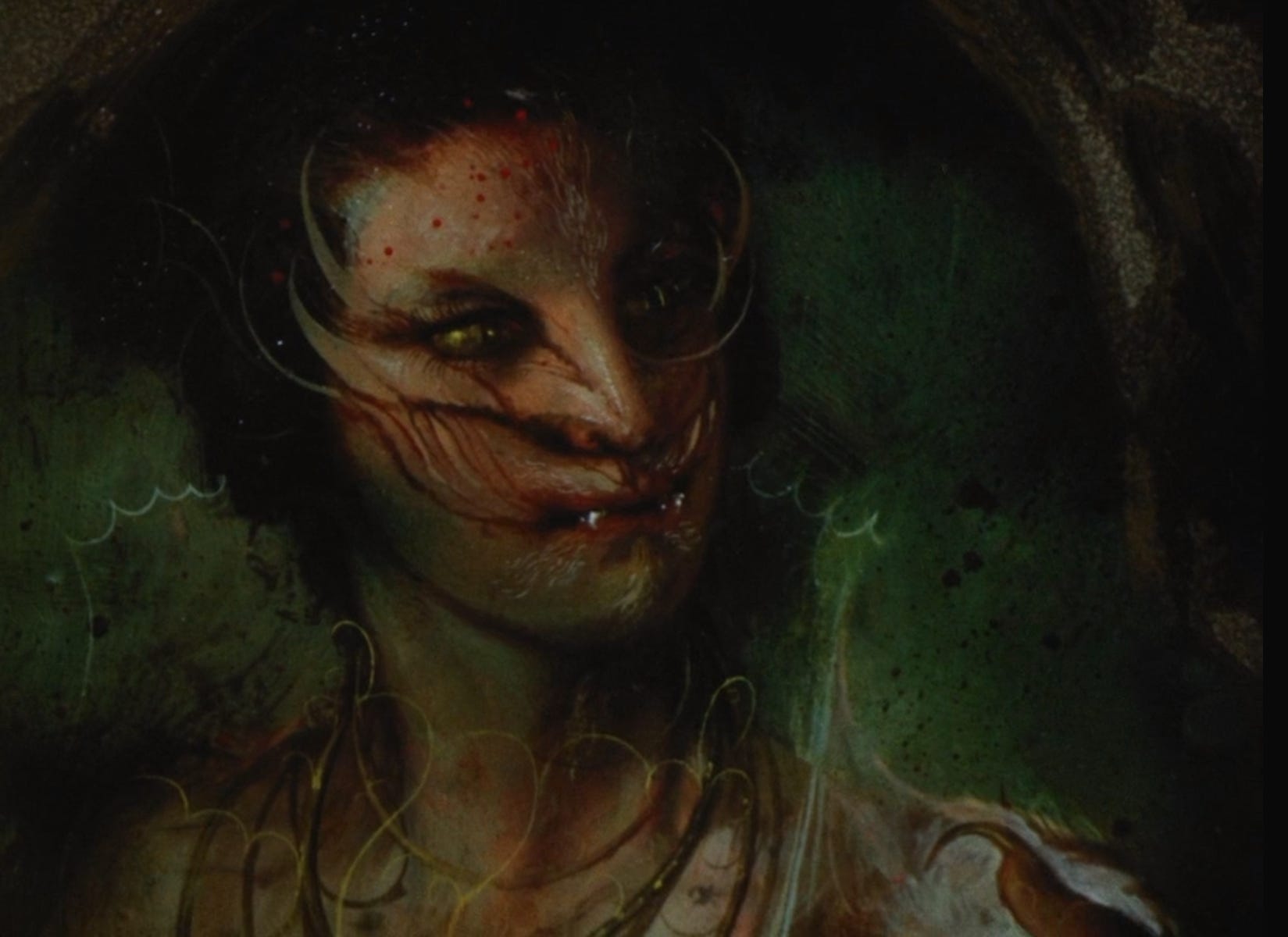
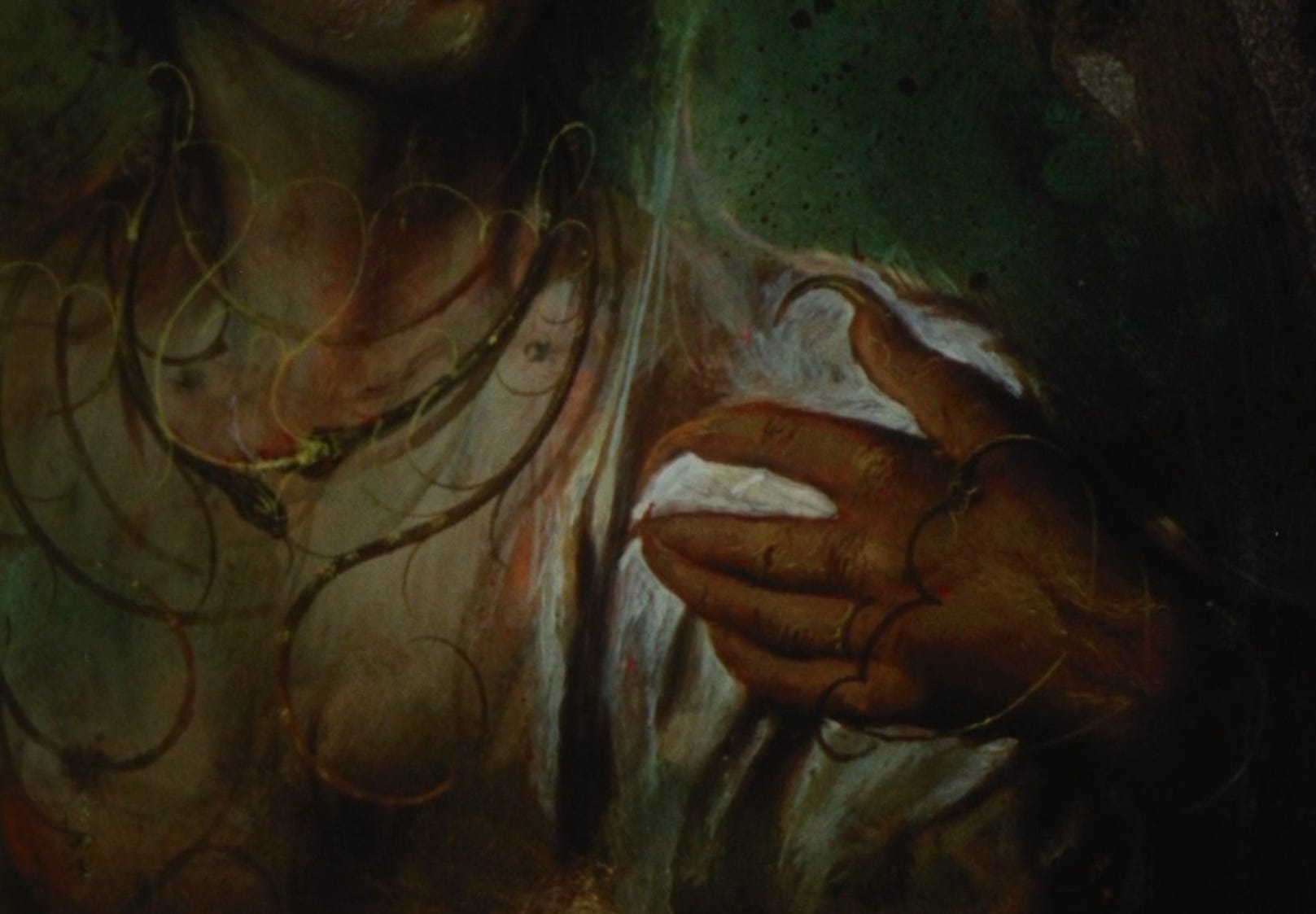
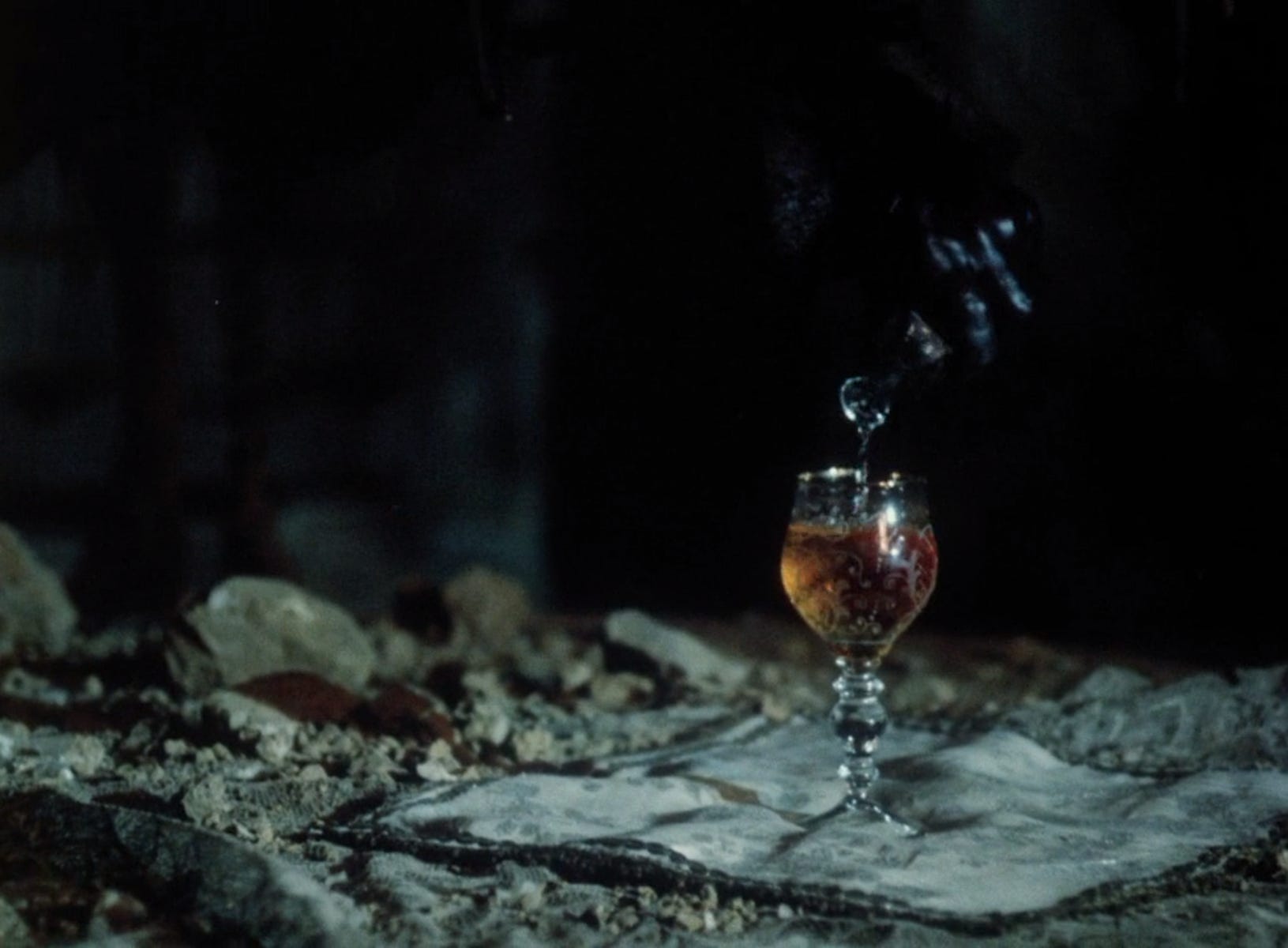
Uncanny paintings9 of monstrous creatures akin to the Beast and his servants can be found within, and a magical hidden doorway behind a curtain provides a passage between the Beast’s world and Julie’s family home. The Beast’s inhuman servants are always just out of sight, spying on guests and quietly serving them with food and drinks. The whole estate is deeply soaked in magic and mystery, much of which remains unexplained: there is no narrative of a fairy godmother or a secret princely identity. The Beast is permitted to remain an enigma.
In short (and not wishing to drag this out overmuch), Panna a Netvor is pretty much a perfect film, and despite its age, it feels like a very ‘new’ experience, simply because it doesn’t particularly look or feel like anything else. There’s perhaps a touch of Jim Henson’s Labyrinth in the otherworldly strangeness of the sets and materials, although the pacing, style and general atmosphere is more akin to something by Tarkovsky.10
Most importantly, though, Panna a Netvor impresses as a genuinely gothic - and genuinely frightening - monster romance, which refuses to de-fang or water down its monster at the outset. Monstrousness is not reduced to a trivial aesthetic: it is a genuine force that must be reckoned with. This is what makes it so suspenseful, and ultimately so affecting.
I’m including a link so that you can watch at your leisure, the stream is spotty but my overactive anti-virus thinks the download link is safe, and it lets you watch in your browser.
If you liked this post, you may also enjoy my recent post on medievalism in film, which covers a number of Soviet and Czechoslovak classics among others. Part 2 of my Darkwood series also touches on fairy tales, cannibalism and Soviet film.
My reason: I keep hearing him delivering this mawkish line in a Frankenstein commercial that interrupts my podcasts multiple times per episode. He goes ‘not something - someone,’ and every time my eyes roll out the back of my head. Del Toro needs to stop, he hasn’t done anything good since 2006.
Also, apologies if this Wuthering Heights banter is out of date, this was supposed to be last week’s but had to get moved for reasons.
I recently learned that Tolkien had a passionate dislike for Disney, which is both very on-brand and a common Tolkien W. He was very serious about fairy tales, and felt that Disney cheapened and infantilised them.
Herz was himself a Holocaust survivor.
A dark wood, if you will. I was going to have a section at the end connecting Panna a Netvor to Darkwood, but it was untidy and too self-referential (particularly given that maybe ten of you at a push are interested in Darkwood, and probably not as austisticly as me). I’m just going to stick a screenshot from my note on the parallels here, and you can read my very good and big-brained Darkwood posts for more if you so desire.
(The Beast needn’t be a mammal, but that’s how he’s usually depicted.)
Obvious date rape parallel.
In the same scene, a young couple are seen climbing into a hayloft.
Often, the camera seems to be positioned as the source of the voice, with the Beast moving about in agitation as he speaks directly to it, cementing the idea of a distinction between the Beast as a creature with a conscience, separate from the curse that drives him. It’s a real Smeagol/Gollum vibe, but if Smeagol was romanceable.
It must be said that the quality of the various paintings made for the film is astonishing - from the strange Bosch-esque images in the opening credits, to the portrait of Julie’s mother, to the monstrous paintings in the Beast’s estate, it was all done to an incredibly high standard.
One might also liken it to The Vourdalak, in my case at risk of sounding like a guy who has only seen The Vourdalak.
As a Czech I remember watching this as a child. It was (and still is) presented as a fairy tale here dispite it being classified as an horror movie. I am very glad it was covered by you! Very nice write up :)
Straight onto my watch list, thank you Ashlander!